
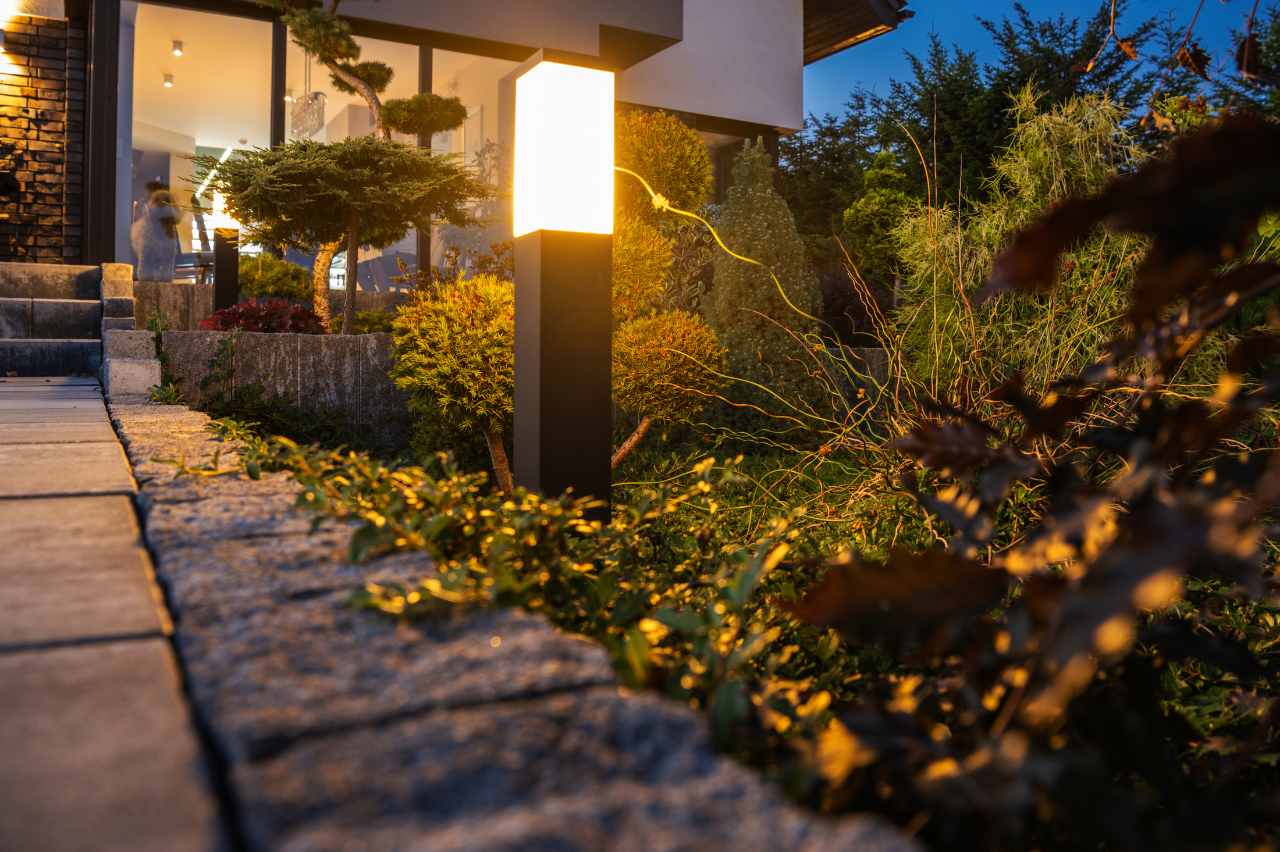
Choosing the right color temperature is one of the most important, and most misunderstood, decisions in landscape lighting design. Contractors are often asked whether 2700K or 3000K is “better,” but the truth is that each serves a different purpose depending on the environment, the fixture type, and the overall design goal. When paired with the correct beam spread, color temperature becomes a powerful tool that elevates both function and aesthetics.
Understanding 2700K vs. 3000K
2700K lighting produces a warmer, softer glow that closely resembles traditional incandescent light. It’s commonly used in residential settings where the goal is comfort, subtlety, and visual warmth. This temperature works especially well along pathways, garden beds, and seating areas where homeowners want a relaxed, inviting feel.
3000K landscape lighting is slightly cooler and crisper. It provides more visual clarity without feeling harsh, making it a strong choice for architectural features, entryways, and areas where visibility and definition matter. When illuminating stonework, columns, or textured surfaces, 3000K can highlight detail more effectively than warmer tones.
Where Each Temperature Works Best
Rather than choosing one temperature for an entire property’s landscape lighting, many contractors achieve better results by mixing both strategically. Path lights often benefit from 2700K to create a welcoming flow through the landscape, while uplights aimed at façades or trees can use 3000K for sharper contrast and depth.
Consistency still matters. Mixing temperatures within the same visual zone can look unintentional, so it’s best to group fixtures thoughtfully and define zones clearly during the design phase.
Beam Spread Matters Just as Much
Color temperature is only half the equation. Beam spread, the width and shape of the light output, determines how the light interacts with the landscape.
Narrow beam spreads are ideal for uplighting trees, columns, or focal points where you want dramatic emphasis. Wider beam spreads work better for paths, walls, and ground coverage where even illumination is the goal. Choosing the wrong beam spread can cause glare, hot spots, or uneven coverage, even if the color temperature is correct.
When selecting fixtures, contractors should always consider the combination of beam angle and color temperature rather than treating them as separate decisions.
Helping Clients Understand the Choice
Homeowners often don’t speak in technical terms, so framing the conversation around feeling and function helps. Explaining that warmer light feels cozier while slightly cooler light enhances visibility makes the decision easier and builds trust.
A thoughtful lighting plan that balances color temperature and beam spread doesn’t just look better, it performs better, reduces callbacks, and leads to happier clients who appreciate the attention to detail. Contact us today if you have any questions about landscape lighting options, we are always happy to help!